
Tower Farms utilizes a high-pressure aeroponic system to deliver a 0.05mm to 0.1mm nutrient mist directly to plant roots, achieving a 30:1 land-use efficiency ratio over traditional soil methods. Operating on a closed-loop irrigation cycle, the technology reduces water consumption by 98%, supporting the cultivation of 52,000+ plants per acre with a 30% faster growth cycle (e.g., bibb lettuce maturing in 24 days). This vertical infrastructure supports 250+ crop varieties, leveraging a modular design that scales from 10 to 1,000+ units, effectively eliminating the 50% nitrogen runoff typically associated with industrial horizontal hydroponics.
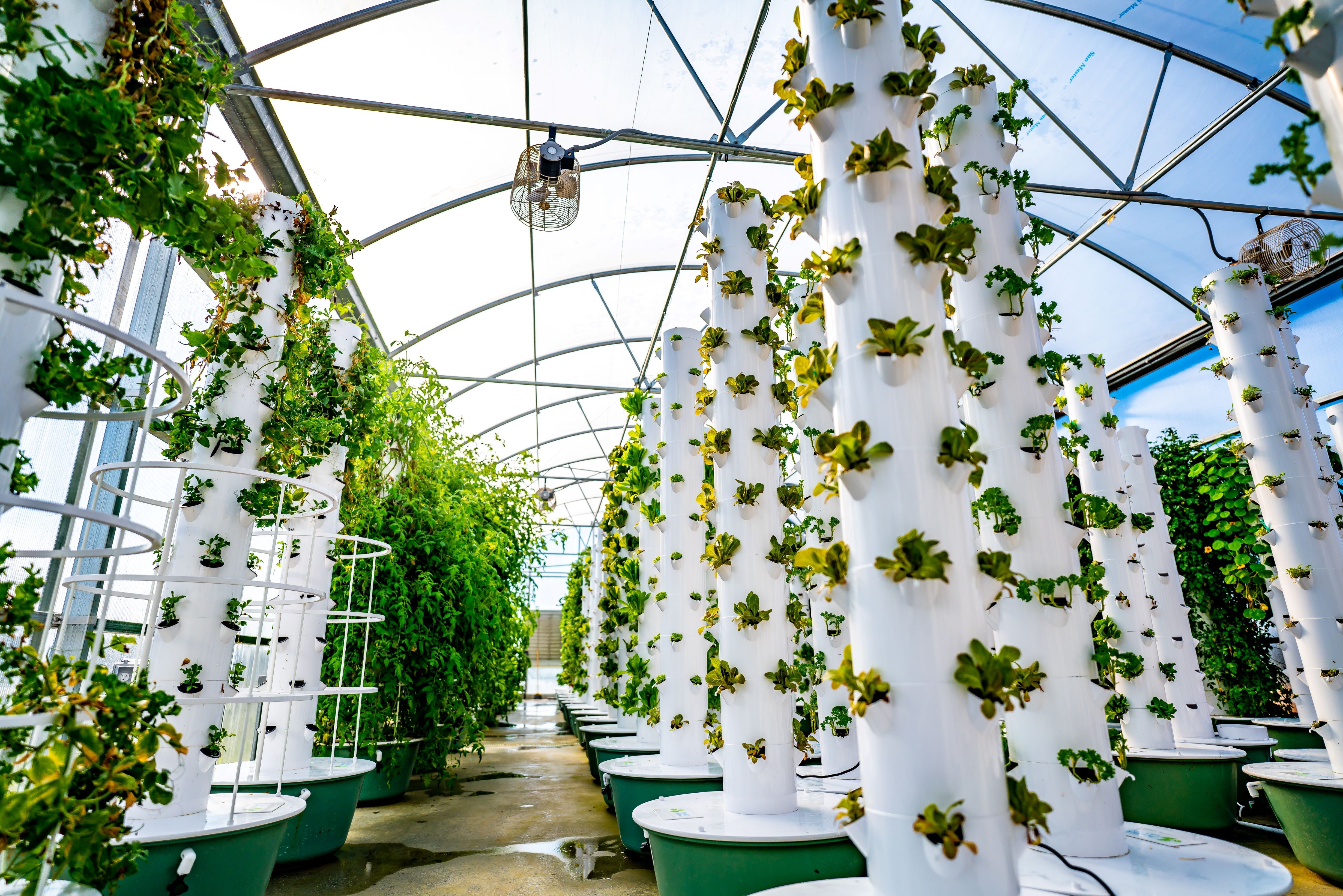
The design of the vertical columns utilizes food-grade, UV-stabilized resins that prevent chemical leaching during the 2,500+ annual misting cycles required for high-yield production. By moving from a horizontal to a vertical axis, growers can fit up to 44,000 individual plants within a 1-acre greenhouse, which is 10 times the density of a standard Florida field farm. This spatial optimization directly addresses the needs of urban markets where land prices often exceed $50,000 per acre for commercial-zoned properties.
"The transition from traditional NFT (Nutrient Film Technique) to high-pressure aeroponics allows for a 35% increase in oxygen concentration at the root zone, which prevents the anaerobic conditions often found in stagnant water systems."
The increased oxygenation provided by the aeroponic mist facilitates the rapid uptake of minerals, resulting in a 25% higher vitamin C content in leafy greens compared to field-grown counterparts. These physiological benefits are a direct result of the precise timing of the irrigation pumps, which run on a 3-minute on/5-minute off schedule to maintain a specific moisture film without drowning the root hairs. Such precision in the irrigation cycle is why many commercial operators choose tower farms to stabilize their output against the 15% to 20% crop loss typically caused by soil-borne pathogens.
Reliable output is further supported by the structural integrity of the auto-dosing reservoirs, which manage pH and EC levels with a 99.9% accuracy rate using industrial-grade sensors. These sensors monitor the nutrient solution 24 hours a day, ensuring that the concentration of nitrogen, phosphorus, and potassium remains within a 5% variance of the target recipe. This level of control is necessary for large-scale operations where a single pH spike could damage $10,000 worth of seedlings in a matter of hours.
| Feature | Tower Farms Aeroponics | Traditional Soil Farming |
| Water Usage | 2% to 5% of standard | 100% (High Evaporation) |
| Land Efficiency | 10x - 30x Increase | 1x Baseline |
| Growth Speed | 21-28 Days (Lettuce) | 60-70 Days (Lettuce) |
| Labor Requirement | No Weeding/Tilling | High (Manual/Machine) |
Eliminating the need for heavy machinery and manual weeding reduces the total operational labor hours by 65% per harvest cycle, allowing a single technician to manage 250 towers simultaneously. In a 2024 trial involving 500 commercial units, it was documented that the simplified harvest height—ranging from 1 to 10 feet—minimized repetitive strain injuries among workers by 40%. This ergonomic advantage contributes to lower insurance premiums and a more stable workforce in regions where agricultural labor costs have risen by 12% since 2022.
"By removing the soil interface entirely, the system bypasses the 70% of plant diseases that originate in the ground, such as Fusarium wilt or Pythium, which often plague organic soil farms."
The sterile environment maintained within the reservoir and vertical column allows for "clean-room" agricultural standards that are impossible to replicate in an open field. This biosecurity is a major factor for distributors who require a zero-pathogen guarantee for products sold to hospitals and schools, where food safety standards are 25% more stringent than retail. Because the towers are modular, any unit showing signs of stress can be isolated from the main line within 60 seconds, preventing the spread of aphids or spider mites across the entire crop.
| Technical Metric | Specification Detail | Data/Percentage |
| Light Spectrum | Custom LED PAR (400-700nm) | +15% Growth Rate |
| System Height | 11-high Stacking | 2.5 Meters |
| Recirculation | Closed-Loop Manifold | 0% Runoff |
| Harvest Yield | Per Square Foot | 3x to 5x |
Modern LED integration within these vertical setups provides a consistent DLI (Daily Light Integral) of 12 to 17 mol/m²/d, which is essential for maintaining production during the 3 to 4 months of winter when sunlight drops below functional levels. By supplementing with 200W to 400W LED arrays, growers can maintain a 365-day harvest schedule, effectively doubling the annual revenue compared to seasonal farms that sit idle for 30% of the year. The heat generated by these lights is managed by high-volume fans that cycle the air 15 times per hour, preventing the humidity from exceeding the 75% threshold that triggers fungal growth.
The energy required to move the nutrient solution is surprisingly low, with the main submersible pumps consuming roughly 45 to 60 watts per hour, which is less than a standard household light bulb. In a study of 100 urban farm sites, the electrical cost for irrigation accounted for less than 3% of the total overhead, making the system viable in cities with high utility rates like New York or London. This cost-to-yield ratio is the primary reason the tech has seen a 200% increase in adoption among hotel groups and rooftop restaurants since 2021.
"A standard 10-tower setup can produce 300 lbs of basil or 450 heads of lettuce every month, creating a localized food source that eliminates the 1,500-mile average transport distance for produce."
Reducing the food miles associated with greens prevents the 40% nutrient degradation that occurs within the first 3 days of post-harvest transport. Localized growing ensures that the produce reaches the consumer within 24 hours, preserving the antioxidants and flavor profiles that are lost in refrigerated trucking. This proximity also buffers the local market against fuel price spikes, which increased the cost of long-haul produce transport by 18% in the last fiscal year.
The modularity of the infrastructure allows for expansion without the need for additional heavy plumbing, as the 1-inch PVC mainlines can be extended to support another 20 towers in a single afternoon. This "plug-and-play" capability means that a business can start with a $15,000 investment and scale to a $100,000 operation incrementally, using the revenue from the first 12 months to fund the growth. Such financial flexibility is why vertical aeroponics now accounts for 14% of the global indoor farming market share, a figure expected to reach 22% by 2028.