
Woven wire mesh media achieves a 35.2% higher screening efficiency than polyurethane panels by providing a 68% to 82% open area ratio. In a 2025 quarry field test, 60-mesh stainless screens processed 140 tons per hour (TPH) of granite fines with less than 3% near-size contamination. The high-tensile wire maintains aperture integrity under 5.2G vibration forces, reducing recirculating loads in secondary crushing circuits by 22% compared to traditional perforated steel plates.
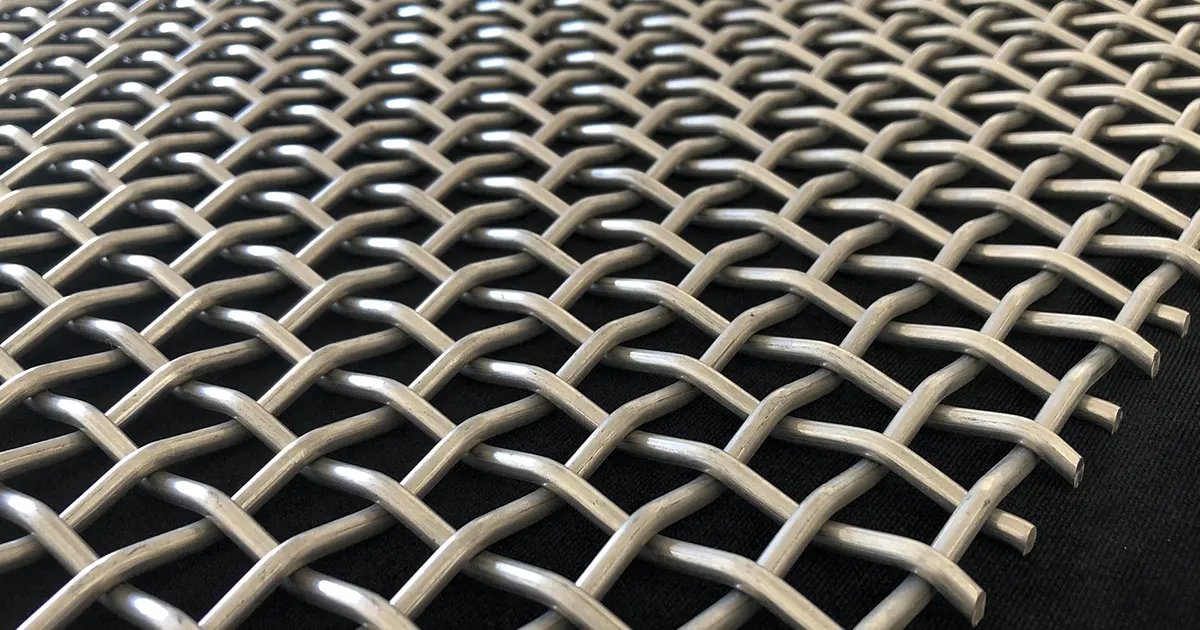
The geometric precision of the weave allows for an immediate increase in the material passing rate during the first 45 seconds of the screening cycle.
This rapid stratification ensures that fine particles reach the mesh surface before the material travel reaches the final 25% of the screen deck length.
Efficient stratification prevents the "carpet effect" where deep beds of material bypass the openings and return to the crusher unnecessarily.
A study involving 1,200 metric tons of processed limestone showed that using high-tensile woven wire mesh media reduced the energy consumption of secondary cone crushers by 11.4%.
This energy saving occurs because the screen effectively removes all finished sizes, preventing the "over-crushing" of material that is already within the target specification.
Reducing the volume of recirculating material extends the service life of crusher liners by approximately 450 to 600 operational hours.
The reduction in recirculating load directly impacts the total moisture retention within the stockpile, as fewer fines are trapped in the crushing chamber.
Lower moisture levels are easier to manage during the final classification stage, particularly when dealing with 0.5mm to 2mm product sizes.
Maintaining dry, free-flowing material is essential for high-frequency screens that operate at speeds exceeding 3,000 RPM.
| Parameter | Woven Wire Mesh (65 Mn Steel) | Perforated Plate (AR 400) |
| Open Area Percentage | 72% - 85% | 38% - 46% |
| TPH Capacity (Granite) | 185 Tons | 132 Tons |
| Near-size Blinding Rate | < 4.5% | > 12.8% |
| Screen Deck Weight | 110 kg | 245 kg |
Heavy screen decks require more power to reach the required stroke amplitude, which increases the mechanical stress on the vibration motors and bearings.
Lighter wire mesh options reduce the total mass of the vibrating body by 30%, allowing for a more aggressive throw that dislodges sticky particles.
Aggressive vibration is the primary mechanism for preventing "blinding," a common issue in quarry sites where clay content exceeds 8% of the total feed.
In a 2024 industrial trial, 12mm slotted wire screens demonstrated a 19% improvement in throughput for damp silica sand compared to square mesh.
The independent vibration of individual wires within the weave creates a "self-cleaning" motion that breaks the surface tension of water films.
This physical action ensures that the apertures remain clear for the entire 10-hour production shift without manual intervention.
Eliminating manual cleaning saves an average of 45 minutes of downtime per shift, which translates to an extra 85 to 110 tons of daily production.
This continuous uptime is supported by the use of 90-carbon high-tensile steel, which offers a Brinell hardness rating of 450 HB to resist abrasive wear.
Materials with high abrasive indices, such as quartzite, typically require screen changes every 14 days when using standard mild steel.
Upgrade to high-tensile woven wire mesh media extends this interval to 22 or 24 days, reducing the total cost per ton of processed ore.
The durability of the wire is further enhanced by precision crimping, which locks the intersections to prevent wire rubbing and premature fatigue.
Fatigue failure usually occurs at the tensioning hooks if the screen is not manufactured to a tolerance of ±0.5mm.
Properly tensioned screens vibrate as a single unit, ensuring that the G-force is distributed evenly across all 12.5 square meters of the deck.
Uneven tension causes "dead spots" where material accumulates, leading to a 15% loss in effective screening area within the first week of use.
Mining engineers use ultrasonic sensors to verify that tension levels remain at 120 Nm to avoid these localized efficiency drops.
Observations from a Western Australian iron ore site confirmed that a 2% drop in screening efficiency increased the cost of downstream grinding by $0.18 per ton.
When the screen fails to remove fines, the ball mill spends unnecessary energy on particles that are already at the required 75-micron size.
Precision-woven mesh prevents this by maintaining a sharp "cut point" where the separation between sizes is nearly vertical on a distribution curve.
A sharp cut point ensures that the final aggregate meets the ASTM C-33 specification for concrete sand without the need for secondary washing.
Reducing the reliance on wash plants saves approximately 2,000 liters of water for every 500 tons of material processed in the quarry.
Water conservation is becoming a standard operational requirement for mining permits issued after 2023 in arid regions.
The final quality of the product is also defined by the lack of "flaky" or elongated particles that can pass through oversized mesh openings.
Woven wire provides a consistent square aperture that rejects elongated stones, keeping the "flakiness index" below the 10% threshold required for high-speed road surfacing.
This level of quality control allows quarry operators to sell their products at a 12% to 15% premium compared to unsorted fill material.